Friday, July 1, 2011

K2 Mountain

History of K-2 Mountain


K2 is the second-highest mountain on Earth after Mount Everest. With a peak elevation of 8,611 metres (28,251 ft), K2 is part of the Karakoram range, not far from the Himalayas, and is located on the border between the Pakistani-controlled territory of Gilgit-Baltistan, in the disputed Kashmir region, and the People's Republic of China's Taxkorgan Tajik Autonomous County of Xinjiang Autonomous Region. It is regarded by mountaineers as far more challenging to summit than Everest, and is generally looked upon as one of the most dangerous mountains in the world.
The climbing season at K2 lasts from June to August, but in 2008 adverse weather prevented any groups from summiting during June and July. At the end of July, ten different groups were awaiting the possibility to reach the summit, some of them having waited for almost two months. The months preceding the summit push were used for acclimatization and preparing for the camps higher on the mountain, the highest of them, Camp IV, just a little short of 8000 m above sea level.

Sunday, June 26, 2011

Pakistan Monument


Pakistan Monument

The National Monument in Islamabad, Pakistan is a national monument representing the four provinces and three territories of Pakistan.

The Monument has been designed to reflect the culture and civilization of the country and also depicts the story of the Pakistan Movement, dedicated to those who sacrificed themselves for future generations. The reddish granite marbel is used in the construction,which is very expensive but the most strong and beautiful stone


.

Monday, June 13, 2011

Old Anarkali Bazaar


The market derives its name from a nearby mausoleum thought to be that of a slave girl named Anārkalī, buried alive by order of the Mughal Emperor Akbar for having an illicit relationship with the Emperor's son, Prince Salīm, later to become Emperor Jahāngīr.
Anarkali Bazar is the oldest bazaar of Lahore, Pakistan, yet it has coped with the changing times by introducing new trends in business. Today it can be considered as one of the best business centres of Pakistan. Anarkali Bazar is divided into two portions, the Old Anarkali Bazar and the New Anarkali Bazar. The Old Anarkali Bazar is famous for traditional food items while the New Anarakli Bazar is famous for its traditional handicraft and embroidery cloths. Babar Handicraft and Gift Centre is the oldest shop located at 110 New Anarkali. It is famous for its quality of hand made products.
The mausoleum of Sultan Qutb-ud-din Aybak of Mamluk Sultanate is also located at Anarkali Bazaar. In the early 1970s, mausoleum was renovated at the orders of the then Prime Minister Zulfiqar Ali Bhutto.

After occupation of Lahore by East India Company in 1849,the place where Anarkali Bazar is located was selected for a cantonment for the Army.Many barracks are still be seen there.Obviously a shopping area was also needed for army.That was the beginning of this bazar.After sometime cantonment was shifted to new location i.e. Mian Mir but anar kali bazar still ther


Monday, June 6, 2011

Hindu Temple In Taxila

History of Hindu Temple In Taxila


Ram Rakhi in the loving memory of her husband Bahagat Lal Rawalpindiwale constructed this temple in 1932. Before partition there was a considerable Hindu population in Jehlum, which have all vanished - either converted to Islam or migrated to India. The vanishing hindu population left behind these magnificent places of worship, which have now been encroached by muslim migrants from India and Kashmir and are in miserable condition.

Thursday, June 2, 2011

Minar-e-Masoomi

History of Minar-e-Masoomi


The architecture of this tower is probably ungainly but there are few details that make it unique in Pakistan. The number 84 is significant with the architecture here as the tower is 84 ft (26 meters) high. One source claims the height of the minar as 31 meter. The number of steps to reach the top of the tower is 84. The circumference of the base of tower is also 84 feet.
The tower’s historical significance arises from the fact that it was built in 1605-1610 AD. In one of the references I read, the year of completion for the tower is given as 1607 A.D. Even with going with the conservative estimate of 1610 AD means the next year Tower of Masoom will complete 400 years of it existence.
It was built by Masoom Shah of Bukkur (an island on River Indus between Sukkur and Rohri). Masoom Shah was the Governer of the area in times of Mughal Emperor Akbar. The tower was built with the purpose of keeping a watch on the area.

On top of the tower is an observation balcony which is now covered with iron railing. At one time it became nototrious for suicidal people flinging themselves to death below. If you look carefully at the top of the tower in our title photo, you can see this iron railing on the viewing balcony. When was this iron cage built? I couldn’t research the date for sure but the last photo of this post below (circa 1896) shows this cage present, which means the iron cage was present atleast in the British era.


Monday, May 30, 2011

Makli Hill


History of Makli Hill.


The province of Sind has a significant place in history being the gateway of Islam; Bab al-Islam. The great religion entered into South Asia from the Arabian Sea when Bin Qasim defeated Dahir; the Raja of Dibal in 712 AD.
Sind embraced Islam in a way that it touched the boundaries of Multan in days to come, but suddenly, Qasim was called back to home for never coming again to this part of the world. Many of his companions liked the fertile land of Sind up to the extent of making it as their abode for good. Among those who stayed here, were many religious and pious individuals; known as saints or Sufis, they preached the doctrine of Islam to the locals.
The saints and Sufis did not leave this place unless they embraced death which marked the introduction of Islamic burial system in South Asia where owing to Hindu, Jain or Buddhist influences, burning of corpses was in vogue, since ever. 

Thatta or Thatto is a historic town with a population of 22000, considered a momentous place in world heritage. Once it was the capital of lower Sind, from 14th to 16th century. It was under the control of the Mughals until the Persian invader Nadir Shah smashed this area which fell in negligence afterwards.
Thatta is known basically for its historical remains; the Shahjehan Mosque (1647-49), tombs of Jam Nizam al-Din (1461-1509) and a vast ancient necropolis with thousand of graves nearby the Hills of Makli.
Makli is believed to be the burial place of more than 125,000 saints or Sufis. This place is also one of the largest necropolises of the world, located in the outskirts of Thatta.
Apart from other legends, the general belief about this place is that the cemetery developed around the shrine of Hamad Jamali, a Sufi of the 14th century AD.
The monuments and the sepultures scattered over the necropolis are the documented proof in solid stone that reveals to us the social, cultural and political history of Sind.
Extrinsically speaking, we can find the imperial mausoleum of two demarked groups, Samma (1352-1520) and Tarkhan (1556-1592). The Samma king Nizam al-Din is also buried here in a square tomb. An impressive structure built of sandstone and decorated in floral and geometrical motifs. On the other hand, the mausoleum of a Tarkhan king, Isa Khan II is a two-storey building in stone with grand cupolas and balconies.
These structures with both Hindu and Islamic influences manifest the motifs and designs which, can be traced back to the later dynasties of Central Asia. The tomb of Jan Beg Tarkhan is an octagonal brick structure with covering in blue and turquoise glazed tiles.
Imperial mausoleums are divided into two major groups, based on the Samma and Tarkhan periods subsequently.
Today, Makli is a United Nations World Heritage Site that is visited by both pilgrims and tourists.
Thatta is also homes the beautiful Keenjher Lake. Visitors from the neighboring metropolis Karachi, usually spend their weekends here in serenity and timelessness, while at the central part of the city of Thatta, is situated the all famous Shahjehan Mosque.
Makli is a silent place, so silent that one can even listen to the unspoken voices and whispers of the sand particles which, fly around and make eyes watery; a tearful homage to the souls who once were not so silent!

Saturday, May 28, 2011

Chagai For Pakistan Atomic Tests

History of Chagai

File:Pakistan Nuclear Test.jpg

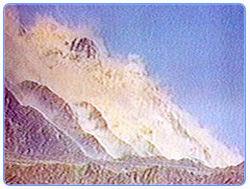
Pakistan's nuclear explosion test in the hills of Chagai Plans to conduct an atomic test started in 1976 when Pakistan Atomic Energy Commission (PAEC) research scientists frequently visiting the area to find a suitable location for an underground nuclear test, 
preferably a granite mountains. After a hectic and day long survey, the PAEC scientists chose the granite mountain Koh Kambaran in the Ras Koh Hills range in the Chagai Division of Baluchistan in 1978. Its highest point rises to a height of 3,009 metres (sources vary). The then-martial law administrator of the province, General Rahimuddin Khan, spearheaded the construction of the potential test sites throughout the 1980s.
Pakistan's nuclear testing in 1998 in Chagai Balochistan
In March of 2005, the former Pakistani prime minister Benazir Bhutto said Pakistan may have had an atomic weapon long before and her father had told her from his prison cell that preparations for a nuclear test had been made in 1977 and he expected to have a atomic test of a nuclear device in August 1977. However, the plan was moved on to December 1977 and later it was delayed indefinitely. In an interview with Geo TV, Dr. Samar Mubarakmand of the Pakistan Atomic Energy Commission, has said that the team of Pakistan Atomic Energy Commission developed the design of atomic bomb in 1978 and had successfully conducted a cold test after developing the first atomic bomb in 1983.


On April 2010, Nawaz Sharif, at a public function to celebrate nuclear blasts, said the then-U.S President Bill Clinton offered a package of US$5 billion for not carrying out nuclear blasts and warned about imposition of ban otherwise. Nawaz said that he was in Kazakhstan in a visit to meet the President, Nursultan Nazarbayev, when India tested its nuclear device. The entire nation was united in favour of nuclear blasts and Mushahid Hussain was the first person who advice that nuclear blasts should be carried out in reply of Indian nuclear explosions. In 1999, in an interview given to Pakistani and Indian journalists in Islamabad, Sharif had said: If India had not exploded the bomb, Pakistan would not have done so. Once New Delhi did so, We [Sharif Government] had no choice because of public pressure.

Ranikot

Ranikot Fort is the world’s largest fort with a circumference of about 29 km or 18 miles. Since 1993, it has been on the list of tenative UNESCO World Heritage Sites.

LOCATION:

It is located in the Kirthar Range, about 30 km southwest of Sann, in Jamshoro District, Sindh, Pakistan. It is approximately 90 km north of Hyderabad.


History of Ranikot.


Who constructed it first and why? Is an enigma yet to be resolved by researchers. Some archaeologists attribute it to Arabs,possibly built by a Persian noble under the Abbasids by Imran Bin Musa Barmaki who was the Governor of Sindh in 836 CE. Others have suggested a much earlier period of construction attributing to at times the Sassanians Persians and at times to the Greeks. Despite the fact that a prehistoric site of Amri is nearby, there is no trace of any old city inside the fort and the present structure has little evidence of prehistoric origins.

Archaeologists point to 17th century CE as its time of first construction but now Sindh archaeologists agree that some of the present structure was reconstructed by Mir Karam Ali Khan Talpur and his brother Mir Murad Ali in 1812 CE at a cost of 1.2 million rupees (Sind Gazetteer, 677).


Fort Ranikot is located in Lakki Mountains of the Kirthar range on the right side of the mighty River Indus at a distance of about 30 kilometers from the present day town of Sann. A mountainous ridge, Karo Takkar(Black Hill), running north to south, forms its western boundary and the ‘Lundi Hills’ forms its eastern boundary. Mohan Nai, a rain-stream enters the fort from its rarely used western ‘Mohan Gate’, where it is guarded by a small fortification, changes its name to ‘Reni’ or ‘Rani Nai’ or rain-stream and gives the fort its name. Ranikot is thus the ‘fort of a rain stream’ – Rani. It runs through it, tumbles in a series of turquoise pools to irrigate fields and leaves the fort from its most used ‘Sann Gate’ on the eastern side. It then travels about 33 kilometers more to enter the Lion River – Indus.

Most of the twenty kilometers long wall is made of natural cliffs and barricades of mountainous rocks which at places rise as high as two thousand feet above sea level! Only about 8.25 km portions of its wall are man-made, built with yellow sandstone. This was first measured on foot by Badar Abro along with local guide Sadiq Gabol. As one enters the fort, one can find hills, valleys, streams, ditches, ponds, pools, fossils, building structure, bastions, watchtowers, ammunition depots, fortresses – all inside Ranikot, adding more to its beauty and mystery. A spring emerging from an underground water source near the Mohan Gate is named as ‘Parryen jo Tarr’ (the spring of fairies).

According to a tale told by the local inhabitants, fairies come from far and wide on the Ponam Nights (full moon) to take bath at this spring near ‘Karo Jabal’! Splashing sounds of water falling on the rocks can be heard at another spring, Waggun jo Tarr or “the Crocodile Spring”, named so as crocodiles once lived there.

Within Ranikot, there are two more fortresses – Meeri and Shergarh, both have 5 bastions each. Meerikot takes its name from the word ‘Mir’ meaning top (for instance the top of a hill, chief of any Baloch tribe, etc.). Both the main Ranikot and the inner Meerikot have similar entrances – curved, angulated with a safe tortuous path. “The bridge in front of Ranikot resembles to a smaller bridge in front of a fortress in Verona, Italy” writes Ishtiaq Ansari, the writer of ‘Sindh ja koat aaein qillaa’ (Forts and Fortresses of Sindh) and a member of Sindh Exploration and Adventure Society. From the military point of view, Meerikot is located at a very safe and central place in the very heart of the Ranikot with residential arrangements including a water-well.

Talpur Mirs used Meerikot as their fortified residence. One can explore ruins of the court, harem, guest rooms, and soldiers quarters inside it. Its 1435 feet long wall has five bastions. Every structure in the Ranikot has its own uniqueness and beauty. Looking up from Meerikot one can find another fortified citadel – Shergarh (Abode of Lions) built with whitish stone, it too has five bastions. Though its location at 1480 feet above the sea level makes this fortress a unique structure, it also makes it equally difficult for supply of water, which can only be had from the brooks and rain streams, hundreds of feet below.The steep climb up to Shergarh gives a commanding view down over the whole fort and its entrance and exit points. On a clear day one can even see Indus, 37 kilometers away to the east.

Beside the Mohan Gate and the Sann Gate, there are two more gates, rather pseudo gates. One is towards the side of ancient town of Amri. This ‘gate’ is called the ‘Amri Gate’. Certainly it takes its name from the prehistoric ruins of Amri, but it must have taken this name much later than the times of Amri as the fort itself doesn’t appears to be as old as the Amri itself. In fact there is a bridge over rain stream ‘Toming Dhoro’ exiting from the fort called ‘Budhi Mori’. The breach in fort wall due to the river stream has been referred as a gate. Similarly, the Shahpir Gate to the south also appears to be a pseudo gate taking its name from a limestone rock with a rough shape of foot imprinted on it. The sacred footprint supposedly belongs to Hazrat Ali or some other religious personality and is venerated by locals. It seems to be a later breach in the fort wall instead of a formal gate because one can’t find any bastion or watchtower or their remains at the site, needed to guard any formal entrance or exit points.

A mosque found in the fort appears to be a later modification of a watchtower or a later construction. Scattered animal skeletons and prehistoric fossils can be found on the top of Lundi Hills. One of the three graveyards has about four hundred graves made of Chowkundi like sandstone with engraved motifs of sunflowers and peacocks. Whether we can call them as theriomorphic and phytomorphic motifs is an open question.

Another one appears to be a graveyard of Arabs. The third one, about a mile away from the Sann Gate, had sixteen or seventeen graves earlier but now there are only four graves. The local inhabitants call it the Roman’s graveyard.


Wednesday, May 25, 2011

Taxila

History of Taxila


The World Heritage site of Taxila is located in Punjab Province, about 30 kilometers from Islamabad. 

Taxila is an archaeological site includes numerous related buildings, fortifications, settlements and monasteries, and shows architectural influences for the length of its role as a Buddhist training center, between the 5th century BC through the 2nd century AD.

At Taxila, you can see the great Buddha. His eyes will gaze upon you till you find yourself gripped by the feeling of awe.
Taxila – It was the capital of the Buddhist kingdom of Gandhara and a centre of learning.

Taxila lies some 35 km (22 miles) north-west of Rawalpindi, near Wah on the way to Peshawar, and is world famous for archeaological sites dating back to the 5th century BC. The Heavy Mechanical Complex and the associated the Heavy Forge Factory, and the Heavy Industries Taxila facility [the former Heavy Rebuild Factory], are located in Taxila.
Exploring Taxila is a multi-dimensional experience.

The richness and variety of the famed Gandhara sculpture is bound to attract your attention. There are many images of Buddha, in stone and stucco and numerous panels depicting all the important stages of the great Sage’s life. One may also find sculptures of the world’s most impressive men of peace. Each carved bit of sculpture shows extravagant beauty and mesmerizing artistery, from colossal to miniature there are literally thousands of such master peices in this collection. To find the difference between the Greek-Roman counterparts and the Gandhara masterpieces will be of great challenge to you.

Then there are the three distinct cities, which are nicely preserved. With your imagination sided by the carved people who inhabit these cities, you will have little difficulty in picturing crowds on the well-laid-out streets, families in spacious houses, priests in the towering stupas and royalty in great palaces.

To welcome you there, are stone men and women who will receive you with open arms in Taxila.

taxila_clip_image001_0000Taxila

* Ancient city, northwestern Pakistan.
* Taxila is one of the most famous archaeological sites in the world.
* Taxila was the ancient capital of the western Punjab.

Anxient City, northwestern Pakistan

Taxila – Its ruins, including temples and a fortress, lie just northwest of Rawalpindi
Taxila, the “City of Stones,” was once a flourishing city along the trade routes of central Asia

At Taxila, You can see the great Buddha. His eyes will gaze upon you till you find yourself gripped by the feeling of awe. Other people whom you can meet at Taxila are, Alexander of Macedonia, Asoka the famous Buddhist king and Kanishka. You’ll find their imprints all over the place.

In 327 B.C. Alexander conquered Taxila, which was the Achaemenian Empire. Later it came under Mauryan dynasty and reached a great level of development under the rule of great Asoka.

The next step in Taxila’s history was the indo-Greek descendents of the Alexander warriors. The final period is called The Gandhara period. The great Kushan Dynasty was then established in 50 A.D, and within these 200 years Taxila became the most renowned center for philosophy, art and learning. Taxila is the greatest attraction for the pilgrims and tourists coming from China and Greece. The final period of Taxila i30-Jul-2007he most successful and the greatest Gandhara civilization of last several centuries.

The earliest city of these, is known as Bhir Mound. Which was established somewhere in the sixth century B.C, whose irregular streets, cramped houses and mediocre public buildings indicate its primitive origins. Then comes the Sirkap city which is on the opposite side of Tamara stream, and was built somewhere around the 2nd century B.C. You will find a marked difference between these cities as this city was well planned.

Famous archaeological sites in the world

Taxila – For sometime, it has been the center of Buddhism, the world famous Gandhara sculpture and the center of learning and culture.
taxila_clip_image001Taxila – ancient city of northwestern Pakistan, the ruins of which are about 22 miles (35 km) northwest of Rawalpindi.


As you stroll down its streets you can call at the houses of the affluent and go slumming, as it were, in the more crowded sections where dwelt the common man of the dim and misty past. Note the fortification of wall, the long, straight and impressive main street, the Royal palace, an Apsidal Temple and the shrine of the double headed eagle. Sirsukh the most modern city of them was built by Kushan kings in the first century A.D. It is’nt fully excavated as yet but is clearly, a well-fortified and well-laid-out city. This city is patterned after the Central Asian cities, and is complete with suburbs.

In addition to these cities, there are many monasteries and stupas which have been excavated all along the Taxila valley. Dharmarajika stupa, which is 2 miles from Taxila museum is a must see stupa. It comprises mainly of buildings, a monastery area where the monk lived and a series of small chapels. Wealth of gold, silver coins, gems, jewelry and other antiques were discovered at Dharmarajika.

Jaulian, another marvelous complex of chapels, stupas, quadrangles, and a monastery with assembly hall, store rooms, refectory, kitchen and bathrooms. At five small stupas you will see some beautiful stucco, the relives of Buddha and Bodhisattvas and supported by rows of stone elephants and lions.

Ancient capital of the western Punjab

Taxila – Sanskrit Takshashila ancient city of northwestern Pakistan, the ruins of which are about 22 miles (35 km) northwest of Rawalpindi
Taxila – It was the capital of the Buddhist kingdom of Gandhara and a centre of learning.

Two miles west of Jaulian is another well-preserved monastery at Mohra Moradu. In one of the monk’s cells here was found a stupa with almost all of the details intact. At Jandial, a mile-and-a-half from Sirsukh, is an imageless temple in the classic Greek style, with sandstone columns and cornices.

Attraction for climbers is Glen of Giri, which is about three-and-half miles from Dharmarajika stupa. Atop the highest peak of the range of hills are two stupas and a fortress built in a cleft near a spring of pure, sweet water. The stucco decorations of the stupas are well worth the climb.
A visit to Taxila is worth spending your money. The men 3000 years ago knew what they were doing when they chose Taxila to built there cities. To feel the enchanting aura and to understand their full importance you’ll have to pay a visit to Taxila. It will take you to an inspiring journey of ancient civilization.

Harappa

History of Harappa


One of the two sites of the Indus Valley Civilization, Harappa is located in the Punjab Province of Pakistan and the site lies some 35 kilometres southwest of Sahiwal. Harappa is the first site of the Indus Valley Civilization that was discovered in the 1920s. Harappa is located about 250 kilometres from Lahore.

Harappa has been the centre of curiosity and interest among history students, historians and archaeologists since its discovery some 85 years ago. A date with history is what takes many tourists to Harappa. Excavations in Harappa have revealed a civilization, which was excellent in town planning and other sphere of every day life.


But it is the excellent town planning that have received kudos from the historians and archaeologists. The houses at Harappa were built in burned brick and had excellent drainage system. Every house had a well as an integral part of it. Roads were wide and were well connected to the streets. Excavations have unearthed a number of artefacts that provide a glimpse of the way of life and various customs and traditions prevalent in Harappa. The cemeteries found in Harappa gives a clear indication that the Harappan people used to burry their dead. They were fond of wearing necklace, ring, bangle and other jewellery. As, many skeletons found in Harappa had beads and anklets in their grave.

A tour to Harappa takes you close to one of the largest civilizations in the world. The Harappa tour is a wonderful discovery of our past. Harappa helps us understand, how modern and progressive was the Indus Valley Civilization.

Takht-I-Bahi

History of  Takht-I-Bahi


Takht-I-Bahi is another exciting historical site that you can visit on your tour to Pakistan. Located about 80 kilometres from Peshawar, Takht-I-Bahi has ruins of an ancient Buddhist monastery atop a hill.

A French officer General Court in the court of Maharaja Ranjit Singh first mentioned about Takht-I-Bahi in 1836. The monastery is believed to date back to the 2nd or 3rd century AD. Takht-I-Bahi is an impressive Buddhist Monastery in Pakistan. The site has rectangular court and the small shrines that surround the stupa-court. The shrines are classical example of fine design and architecture. The hill offers magnificent views of the surrounding area.

The site is a great source of information on Buddhism and the way of life people here used to follow. The site is an excellent example of brilliant planning and scientific architecture. Song Yun, a Chinese pilgrim, who visited the region, describes Takht-I-Bahi as one of the important city lying on the commercial route to India.


Excavations of the site have unearthed a number of building blocks like the courtyard, the main stupa, assembly hall and the low level chambers.
 

Tuesday, May 24, 2011

Uch Sharif

History of Uch Sharif


Uch Sharif is one of the beautiful historical sites in Pakistan. Located at the confluence of the Sutlej and Chenab, Uch Sharif is a wonderful tourist destination. Different historians have different views about the history of Uch Sharif, some say the town was there before the reign of Bikramajit. Uch Sharif was under the Hindu ruler before Alexander's invasion.

Uch Sharif is basically famous for various beautiful shrines and tombs. The beautiful shrines and tombs are what attract many tourists to Uch Sharif. Uch Sharif has been divided into three sections, which are named after three important personalities and rulers. Uch Bukhari is named after the name of Hazrat Syed Jalaluddin Bukhari Surkhposh while Uch Jilani has borrowed its name from Hazrat Shaikh Mohammad Ghaus Qadri Jilani. The third section is Uch Mughlian is named after the Mughal rulers.

Some of the famous shrines in Uch Sharif include Hazrat Jalaluddin Surkh Bukhari, Makhdoom Jahanian Jahangasht, Hazrat Bahawal Haleem, Shaikh Saifuddin Ghazrooni and Bibi Jawandi. The tomb of Bibi Jawinidi is a wonderful monument that is beautifully designed and is covered in a number of tiny blue tiles that present wonderful sight when sunrays fall on them. The shrine of Jalauddin Bukhari is a must visit sight at Uch Sharif. The saint is believed to have converted the legendary warrior Genghis Khan to Islam. 

Kot Diji

History of Kot Diji


The discovery of Kot Diji in Pakistan has pushed back the history of the Indian sub continent some 300 years. After the discovery of the Indus Valley Civilization, it was believed that Harappa and Mohenjo Daro were the first civilizations of the sub continent that date back to 2,500 BC. But the discovery of Kot Diji, which is located between Ranipur and Khairpur (on the highway from Hyderabad), made historians and archaeologists believe that there was a civilization before the Indus Valley Civilization.

Excavations of the site and the evidence that archaeologists have found from Kot Diji are of pre-Harappan and pre-Mohenjo Daro time. Historians and archaeologists believe that Indus Valley Civilization borrowed or developed some of the basic elements of life and culture from the civilization that was thriving at Kot Diji.


A journey to Kot Diji reveals the way of life Kot Dijians used to follow. The site at Kot Diji has two sections to it. One, that is spread over on the high ground belonged to the ruling elite while the outer area was inhabited by the common man. Excavations have shown that the houses in Kot Diji were built by mud-bricks and had solid stone foundations. 

Ganndhara

History of Ganndhara


Ganndhāra is the name of an ancient kingdom (Mahajanapada), located in northern Pakistan and eastern Afghanistan. Ganndhara was located mainly in the vale of Peshawar, the Potohar plateau and on the Kabul River. Its main cities were Purushapura (modern Peshawar), literally meaning City of Manand Takshashila (modern Taxila).

The Kingdom of Ganndara lasted from c. the 6th century BCE to the 11th century CE. It attained its height from the 1st century to the 5th century under the Buddhist Kushan Kings. The Hindu Shahi, a term used by history writer Al-Biruni to refer to the ruling Hindu dynasty that took over from the Turki Shahi and ruled the region during the period prior to Muslim conquests of the tenth and eleventh centuries. After it was conquered by Mahmud of Ghazni in 1021 CE, the name ****hara disappeared. During the Muslim period the area was administered from Lahore or from Kabul. During Mughal times the area was part of Kabul province.

Geography

The Ganndhāri people were settled since the Vedic times on the banks of Kabul River (river Kubhā or Kabol) up to its mouth into the Indus. Later Ganndhāra included parts of northwest Punjab. Ganndhara was located on the northern trunk road (Uttarapatha) and was a centre of international commercial activities. It was an important channel of communication with ancient Iran and Central Asia.

The boundaries of Ganndhara varied throughout history. Sometimes the Peshawar valley and Taxila were collectively referred to as Ganndhara and sometimes the Swat valley (Sanskrit: Suvāstu) was also included. The heart of Ganndhara however was always the Peshawar valley. The kingdom was ruled from capitals at Pushkalavati (Charsadda), Taxila, Purushapura (Peshawar) and in its final days from Udabhandapura (Hund) on the Indus. According to the Puranas, they have been named after Taksha and Pushkara, the two sons of Bharata, a king of Ayodhya.

Ancient Ganndhara

Prehistoric Period


Evidence of Stone Age human inhabitants of Ganndhara, including stone tools and burnt bones, was discovered at Sanghao near Mardan in area caves. The artifacts are approximately 15,000 years old. More recent excavations point to 30,000 years before present.

To date, no evidence of the Harappan Culture of the Indus Valley Civilization has been found in Ganndhara. According to some scholars, the Aryans moved into Ganndhara and the rest of North Western Pakistan around 1500BC.

The region shows an influx of southern Central Asian culture in the Bronze Age with the Ganndhara grave culture, likely corresponding to immigration of Indo-Aryan speakers and the nucleus of Vedic civilization. This culture survived till 600 BC. Its evidence has been discovered in the hilly regions of Swat and Dir, and even at Taxila.

The name of the Ganndhāris is attested in the Rigveda (RV 1.120.1) and in ancient inscriptions dating back to Achaemenid Persia. The Behistun inscription listing the 23 territories of King Darius I (519 BC) includes Ganndāra along with Bactria and Thatagush (ϑataguš, Satagydia). In the book "Histories" by Heroditus, Ganndhara is named as a source of tax collections for King Darius. The Ganndhāris, along with the Balhika (Bactrians), Mūjavants, Angas, and the Magadhas, are also mentioned in the Atharvaveda (AV 5.22.14), as distant people. Ganndharas are included in the Uttarapatha division of Puranic and Buddhistic traditions. The Aitareya Brahmana refers to king Naganajit of Ganndhara who was contemporary of Janaka, king of Videha.

Ganndharas and their king figure prominently as strong allies of the Kurus against the Pandavas in the Mahabharata war. The Ganndharas were well trained in the art of war. According to Puranic traditions, this country (Janapada) was founded by Ganndhāra, son of Aruddha, a descendant of Yayāti. The princes of this country are said to have come from the line of Druhyu who was an (assumed) king of the Druhyu tribe of the Rigvedic period. According to Vayu Purana (II.36.107), the Ganndharas were destroyed by Pramiti aka Kalika, at the end of Kaliyuga.
Mother Goddess (fertility divinity), derived from the Indus Valley tradition, terracotta, Sar Dheri, Ganndhara, 1st century BC, Victoria and Albert Museum

The Ganndhara kingdom sometimes also included Kashmir. Hecataeus of Miletus (549–468) refers to Kaspapyros (sometimes interpreted as referring to Kashmira) as a Ganndaric city. According to Ganndhara Jataka, (Jataka No 406), at one time, Ganndhara formed a part of the kingdom of Kashmir. The Jataka also gives another name Chandahara for Ganndhara. Buddhist texts like Anguttara Nikaya refer to sixteen great countries (Mahajanapadas) which flourished in the Indian subcontinent during Buddha's time; only two of them, the Ganndhara and the Kamboja were located in the Uttarapatha or the northwestern division.

Ganndhāra is also thought to be the location of the mystical Lake Dhanakosha, the birthplace of Padmasambhava, the founder of Tibetan Buddhism. The bKa' brgyud (Kagyu) sect of Tibetan Buddhism identifies the lake with the Andan Dheri stupa, located near the tiny village of Uchh near Chakdara in the lower Swat Valley. A spring was said to flow from the base of the stupa to form the lake. Archaeologists have found the stupa but no spring or lake can be identified.

khewra salt mines


History:
Geologists put the age of rock-salt found in Khewra at about 600 million years. In geological timescale this time period is called PrecambrianIt is said that discovery of rock salt in Khewra area dates back to as early as circa 326 BC. According to a legend, the army of Alexander the great was resting in Khewra area after a battle with Raja Porus. Some horses ofAlexander‘s army were then seen licking rock salt in the area. Somebody from Alexander‘s army noted down the incident in his ledger or diary and hence?we came to know that salt was discovered?here circa 326 BC.?History is however silent?on which language this incident was recorded in (Greek?) or where is that diary now. But since those days people in the area continued to collect salt from the out crops of salt seams that were exposed at the hill surface. It is said that the chiefs ofJanjua-Raja’ tribe were the first to initiate the standard mining practices here in the13th Century. However, a chronology of the Mughal Rule in the Sub-Continent says that when the Mughals emerged supreme in the Punjab, they took over the mine from the local tribal chiefs and, thereafter, started to work on it until Punjab came under the Sikhs. Under Sikh rule the mine came up to be known as ‘Khewra Salt Mine’. The British ousted the Sikhs and annexed Punjab in 1849 and renamed the mine as the‘May Mine’ in 1870.
In 1872, Dr. H. Warth, a renowned British Mining Engineer, laid out the main tunnel at ground level. He proposed that only 50% of salt be excavated from the working seam while the remaining 50% be left as pillars. 155 years later this same methodlogy called the ‘room and pillar’ method is still being used in Khewra mining operation.
..Photo to the left shows rail tracks in the main tunnel of the mine. Can you also see some ghosts walking in the tunnel….
To make salt from Khewra mines accessible to rest of India, British laid a railway line which was opened as a meter-gauge on January 1, 1883. It was later converted to a siding and a broad gauge line was laid which is operational to date.
Salient Features:
Khewra salt mines are the second largest salt mines in the world, outdone only by Wielicza salt mine in Krakow, Poland.
At present the Khewra Salt Mine is in the control of a federally controlled corporation i.e. Pakistan Mineral Development Corporation (PMDC).
.. Photo to the right is the main entrance. The date written on top-middle of this arched gate is 1916-17. The Urdu sign reads ‘Salt Mine Khewra’ which is literal translation of English text to the left. Until few years ago the sign in Urdu had Persian influence and it used to say ‘kaan-e-namak Khewra’. Sign of changing times!!…
Ok. Get ready to digest some numbers in this paragraph. There are19 levels (similar to stories in a building) in the mine. Seven levels are above ground and twelve are underground. There is a clearence of 50ft of salt/rock between each level. Annual extraction of salt here is around 315000 tonnes (in 2003-04). The mine is 350m above sea level and goes 730m deep into the mountain. The cumulative length of tunneling which is done inside the mine is more than 40 km. Inside the mine there are seven rock salt seams with an accumulated thickness of 150 metres.
In spots the rock salt is 99% pure. Some people say salt or no salt, it is hard to find anything so pure outside the mine these days. The average purity however is around 96%. According to PMDC website the salt deposits here are 6.687 billion tonnes. It was difficult for me to imagine how much salt is that but at another website I read this is enough deposit for 400 years (unconfirmed). It must also depend on how much salt is extracted every year.
What to See:
Since 2002, the main tunnel of the mine has been converted into a tourist attraction. Some of the websites we consulted claim 35000-40000 visitors come here every year. In 2003 a major restoration work was carried out at the mines to make it a prime tourist destination. Decorative light-work was done to make portions of mine a walk through the glittering stars. The salt crystal found here is translucent?which means it absorbs some light and reflects some.
..Photo to the right shows a wall made of salt bricks. Notice the different shades of rock salt under light..
Depending upon the thickness (among other properties), the salt rock glows when lit in many different shades.
The tourist attractions inside the mine include:
(1) Assembly Hall: It is the name given to?a large chamber in the mine. It measures about 75m in height and fascinates tourists because stairs go circling around the hall to the top.
(2) pul-saraat: This is a Salt Bridge called the Pul-saraat. It?has no pillars whatsoever to support it. It is just a narrow strip of pure rock salt 20 to 25 feet in length and 5 feet thick with 80 feet deep ponds of brine (Saltish Water) on both sides. Those who know the meanings of real pul-saraat must be enjoying the creativity of people who thought about naming this salt bridge as such.
(3) Indoor Brine Ponds:
Inside the mine there are certain chambers filled with saturated brine solution. The salty water seeps through mine walls and roof and collects into these chambers overtime. There are several such water-filled chambers in the mine but they are very difficult to see in the dark. Only two such ponds have been illuminated for tourism purposes. One such pond is shown in the photo to the left.
(4) Badshahi Mosque: There is a mosque built inside the main tunnel of the mine. It is called the ‘badshahi masjid’. To beautify the mosque different colours of salt bricks have been used. Red, Pink and White are the major shades of salt bricks. Between the Bricks space has been provided for the electric bulbs to lit the mosque.
..Photo to the right shows Badshahi mosque inside the main tunnel of Khewra Salt Mine..
(5) Sheesh Mahal:?The word Sheesh Mahal means ‘Palace of Mirrors’. There is an area called Sheesh Mahal in the mine named such for?colorfully reflecting salt bricks. The salt here is of light pink color and glows in many different shades under light.
(6) The Great Wall of China, The Mall, Shimla Hill andMeenar-i-Pakistan:
The salt walls of the main tunnel has carvings of some famous structures which glow under light in beautiful shades. These wall carvings include models of the Great Wall of China, the Mall road of Murree, Lahore’s Shimla hill, Minar-e-Pakistan Lahore etc. All these structures are made of Salt that emit pink, white and red lights when lit up.
.. Photo to the?left above?is a carving of meenar-e-Pakistan made by salt bricks. The dimensional?scaling of this model as compared to the real meenar-e-Pakistan is extremely violated here but we should not keep it against the artists?of Khewra mines…
(7) Narrow Gauge Electric Railway:
A narrow gauge electric train transports visitors from the visitors gate to a track juncture some 500m inside the tunnel. Outside the tunnel one can also see abandoned rails and small train wagons that were used here for salt extraction since1930s.
..Photo of this train is given to the right.
The fare structure for this train is expensive and kind of complicated. Fare for a ride is Rs. 250. Twelve people of a group can ride in this fare. For any person more than a group of 12, the fare is Rs 20 each…e.g. 13 people in a?group will pay Rs 270 and so on..

Sunday, May 22, 2011

kallar kahar

History of Kallar Kahar


Lying 30 miles southwest of Chakwal on the Chakwal-Sargodha road, Kallar Kahar is known for its peacocks, for its freshwater lake, and for the Takht-e-Babri, a flat stage built of stone by emperor Babar to address his army while coming down from Kabul in the quest of the crown of Delhi. During his stay at Kallar Kahar, Babar also planted a garden, which still exists, called the Bagh-e-Safa. In his memoirs, the Tuzk-e-Babri, Babar described Kallar Kahar as a "charming place with good air" and natural beauty

Mohenjo Daro

History of Mohenjo Daro


Mohenjo Daro (Mound of the Dead) is situated on the West Bank of the river Indus. It was discovered in 1922, having one of the earliest and most developed urban civilizations of the ancient world. It is the part of the Indus River civilization of Harapa discovered in 1921, 1287.48 km Mohenjo Daro away from . River Indus civilization flourished from somewhere third till the middle of second millenium BC. before it vanished from the world. Mohenjo Daro had mud-brick and backed-brick buildings. Covered drainage system in addition to this, soakpits for disposal bins, a large state granary, a spacious pillared hall, a collage of priests, a large and imposing building (probably a palace) and a citadel mound which incorporates in its margin a system of solid burnt brick tower.
Moenjodaro looks like a planed, organized and master architecture of urban settlement. Beneath the citadel, parallel streets, some 30 feet wide, stretched away and are crossed by other straight streets, which divide the town into a great oblong block, each 400 yards in length, and 200 to 300 yards in width. The most imposing remains are those of a Great Hall which consisted of an open quadrangle with verandahs on four sides, galleries and rooms on the back, a group of halls on the north and a large bathing pool. It was probably used for religious or ceremonial bathing. 
Nearby are the remains of Great Granary, possibly a public treasury where taxes were paid. We can assume the sensibility of the and artistic mind by the discovery of necklaces, pendants of beads, earring and ankles of ivory and mother of pearl, vessels of silver and bronze and stone weights and measures which suggests the existence of stringent civic regulations.
When the first seal was found in Harapa in 1875 it was thought to be of a foreign origin. A humpless bull with an illegible inscription comprising six characters, were engraved on dark brown jasper. 
The significance of this, and the multitude of other seals to follow, was felt when it was realized that the engraved characters and pictures are not only in indigenous to the Indus civilization but a thorough understanding of engravings can give a comprehensive account of the true nature of the Indus civilization. First it was thought that the pictograph and the ideograms were related to Brahmi characters or where perhaps the forerunner of Brahmi. It was also suggested that the seal was ideophonographic and resembled the Hieroglyphic seal. 
On the other hand work was being carried on to prove the Dravdian had inherit many Indus signs thus proving the Dravdic affinity of the Indus seal. Its destruction was by the hands of invading Aryan hordes, as some historians believe, or was triggered by an earthquake, or flood remains yet to be established. The Moenjodaro museum, close to the site of excavation, houses price-less relics found there, including these engraved seals, ornaments utensils, pottery, weapons and toys. Some of the precious things have been recently shifted from the site museum to the local government treasury.


Interestingly, the bullock carts, boats, drinking jars, toys used even today in the adjoining areas, bare strong resemblance to those used by the ancient citizens of Moenjodaro as a visit to the museum makes plain. From coins and potteries discovered, archeologists believe trade and cultural links existed between Moenjodaro and the contemporary civilizations of Mesopotamia and Egypt. 
Various objects d'art found at Moenjodaro include burnt clay male and female figurines, and models of bird, a steatite bust a noble man or a priest-king, wearing a loose rob on which the tretoil pattern is engraved and small dancing girl bronze with slim figures and flat negroid features. Steatite seals bearing lifelike representation animals and mythological creatures such as the unicorn best illustrate the figural. They bear short inscription in a remarkable pictographic script, which has yet to be deciphered. 
The various layers of the excavated site show that upon the debris of the ancient civilization rose the buildings and edifices of a much latter settlement dating back to Kushan period (between the first and the third centuries AD). The remains of the Buddhist stupa and monastery, rising to the height of 10.66 meters (35 feet) above the surrounding area, are of this later period. How this remarkable civilization came to an end after 1800 BC remains a mystery. Human skeletons show signs of violent end. Weather this came as the result of massacre is not certain. 

According to Father Heras the vertical fish sign meant a star, because in most of the Dravidian languages both the star and the fish are referred to as mint. There are many other examples of a similar nature quoted in his works. All this inspired many scholars including, Soviet, Scandinavian and Pakistanis, to start looking into the matter more seriously. 

Saturday, May 21, 2011

Lok Virsa Museum

History of  Lok Virsa Museum.


Lok Virsa Museum is situated in Islamabad, Pakistan. It displays the cultural heritage of Pakistani people. The living style of the different areas of Pakistan is exhibited here in statues, pictures, pottery, music and textile work. Lok Virsa is the finest cultural museum in Pakistan.
The Lok Virsa Museum also known as the Folk Heritage Museum run by the National Institute of Folk & Traditional Heritage represents art works towards preserving the living folk and traditional culture and crafts of Pakistan. It is located near Shakarparian Hills and has a large display of embroidered costumes, jewellery, woodwork, metalwork, block printing, ivory and bone work. Traditional architecture facades exhibiting such skills as fresco, mirror work and marble inlay; tile, mosaic and stucco tracery are also displayed.
Adjacent to the Lok Virsa Museum, the Lok Virsa Heritage Reference Library is well equipped with resource data on ethnography, anthropology, folk music, art, history and crafts. Books on culture, heritage, audio and video-cassettes of folk and classical vocal and instrumental music are available for sale at Lok Virsa’s sales center.

Masjid Wazir Khan

History of Masjid Wazir Khan.


This is a beautiful Masjid built, in 1634-35 AD during the reign of Mughal Emporer Shahjehan, by Nawab Wazir Khan who was governor of Lahore until 1639 AD.
Both the external and internal walls, domes, minarets and doorway arches are covered in mosaic tile work in an array of colours.
There is a very large courtyard with a marble fountain in the centre. 
The use of traditional Islamic patterns  and calligraphy are too beautiful to describe and must be seen in person to appreciate.
The masjid is located close to the Delhi gate - one of the oldest parts of Lahore, and is only a short drive from Shahi Qila, and Badshahi Mosque (aprox. 10 minutes).

Shahi Qila


History


Shahi Qila of Lahore


The original construction of the Lahore fort is not till date known but it is based on the numerous traditional customs and rituals. In the year 1959 an excavations were carried out by the department on Archeology. The excavation works was carried outside the hall, Diwan-e-Aam. Excavating an area nearly 7.64 m a gold coin was been obtained. The coin belonged to Mahmood of Ghazni. The coin dates back to 1025 AD. The same area was further excavated for more 5 m. Numerous proofs was obtained from the area that stated that the place was been inhabitated even before its conquest by Mahmooh in the year 1025 AD. It was later found that the fort was also present when Shahab-ud-din Muhammad Ghuri had attacked Lahore in 1180 AD and later in 1186 AD. The actual date of the construction of the fort is not found, but there are many strong evidences that believes that the fort was been built somewhere around 1025 AD.
Following are the changes that the Lahore fort had witnessed in the passing years:
The Lahore fort was destroyed in the year 1241 AD by the Moghuls.
Sultan Ghiyas ud din Balban had reconstructed the fort in the year 1267 AD.
The fort was again destroyed in the year 1398 AD by the army of Amir Tamir.
In the year 1421 AD Sultan Mubark Shah Syed had constructed the fort again with mud.
Kabul’s Shaikh Ali had taken over the fort in the year 1432 AD. He was the one who took care of the damages of the fort that were created by Shaikha Kokhar.
The famous Mughal Emperor Akbar had constructed the fort in the year 1566 AD with the help of concrete brick stonework on its original foundation. The area of the fort was extended up till the Ravi river and later by the year 1849 AD the borders of the fort was extended in the northen region. The Masjidi Gate, and the well-appreciated Jharoka-e-Darshan and also the Doula Khana-e-Khas-o-Am was been constructed by the Emperor Akbar in the later fortified area. Jharoka-e-Darshan is commonly known as the Balcony for Royal appearance.
The Doulat Khana-e-Jehangir was been constructed by Jehangir in the year 1618 AD.
In the year 1631 AD the Shish Mahal was been constructed by the year Shahjahan. The Shish Mahal is commonly known as the Mirror Palace.


The Khilwat Khana commonly known as the retiring room , Moti Masjid commonly known as Pearl Mosque, the Khawabagh commonly known as the dream place and the Hamam was been constructed in the year 1633 AD by Shahjahan.
The Hall of the Special Audience which is known as Diwan-e-Khas was constructed in the year 1645 The Hall of the Special Audience by Shahjahan.
Aurangzeb in the year 1674 AD ordered the construction of the magnificent Alamgiri Gate.
A Sikh ruler, Ranjit Singh had order for the northern wall’s fortification. The walls were mortified with moat. Later an athdera was built out of the marble. The Havaeli Mai Jindal was also constructed during the rule of Ranjit Singh.
The Britishers had acquired the Lahore fort in the year 1846 AD.
In the year 1927 AD, the Lahore fort was handed over to the Department of Archeology by the Britishers. Few sections of the fortified walls on the southern region were demolished renovating the fort into a stride form thus the fort was refortified.
The various sections in the Lahore fort are as follows:
  • Maidan Diwan-e-Aam commonly known as Garden of Public Audience.
  • Daulat Khana-e-Khass-o-Aam
  • Makatib Khana
  • Haveli of Mai Jindan
  • Jahangir’s Quadrangle
  • Haveli of Kharak Singh
  • Mashriqi and Maghribi Iwans commonly known as East and West Chambers.
  • Mashriqi and Maghribi Suites
  • Khwabgah-e-Kalan commonly known as Bari Khwabgah.
  • Bangla Pavilion
  • Zenana Hammam
  • Shah Jahan’s Quadrangle
  • Diwan-e-Khass commonly known as the Hall of the Special Audience
  • Intizar Gah
  • Khwabgah-e-Shahjahani
  • Paien Bagh and Khilwat Khana Quadrangle commonly known as Chamber of Seclusion.
  • Khilwat Khana commonly known as the retiring room
  • Lal and Kala Burj commonly known as Scarlet and Black Towers.
  • Shah Burj or Royal Tower
  • Reception Court
  • Ranjit Singh’s Athdara
  • Shah Burj Quadrangle commonly known as Royal Tower
  • Shish Mahal commonly known as Hall of Mirrors or Mirror Palace
  • East and West Dalans
  • Naulakha Pavilion
  • South Dalans